
University Coach Tours to Ancient Monuments
History students don’t just study the past from books—they walk its roads, explore its ruins, and touch its stones. Ancient sites across Europe and the Mediterranean are living textbooks that bring to life what no lecture or documentary can fully convey. Whether it’s the Roman Forum in Italy, the Acropolis in Greece, or the Celtic settlements of Gaul, these ruins offer rich, immersive learning experiences. But reaching these often remote or scattered sites poses logistical challenges for universities, colleges, and secondary schools organizing study trips. This is where coach hire for history students visiting ancient ruins becomes essential. With structured, safe, and custom-tailored transport, educators can focus on delivering historical insights while coach providers handle all the travel logistics—connecting centuries-old landmarks with modern-day mobility. This in-depth guide explores the benefits, planning strategies, and practical considerations of hiring coaches for academic tours focused on ancient ruins.
Chapter 1: The Importance of On-Site Learning at Ancient Ruins
Experiential Learning Beyond the Classroom
Visiting ancient ruins is a pedagogical powerhouse University Coach Tours to Ancient Monuments for history students. It:
- Deepens understanding of ancient civilizations.
- Sparks critical thinking and contextual analysis.
- Encourages collaborative inquiry and active observation.
Standing in front of Hadrian’s Wall or inside Delphi’s amphitheatre evokes a visceral understanding that goes far beyond any textbook description.
Cultural Immersion and Historical Empathy
Students gain:
- Exposure to ancient art, architecture, and inscriptions.
- Insights into the socio-political dynamics of ancient empires.
- Respect for preservation, archaeology, and cultural heritage.
Chapter 2: Why Coach Hire is Ideal for History Field Tours
Access to Remote Sites
Ancient ruins are rarely found next to train stations or major airports. Sites such as:
- Pompeii (Italy)
- Segesta (Sicily)
- Butrint (Albania)
- Epidaurus (Greece)
- Timgad (Algeria)
…are often located outside urban centers, requiring reliable group transportation over long or winding roads. Coaches provide direct access to these locations.
Customised, Multi-Site Itineraries
Coach hire allows educational groups to:
- Visit several ruins in a day or week-long itinerary.
- Travel across borders (e.g., Athens to Delphi to Corinth).
- Adjust routes in real time depending on learning needs or weather.
Group Cohesion and Safety
Unlike rail or air travel, where students may be separated:
- Coaches keep the group together.
- Attendance and safety checks are easier.
- Teachers maintain better control over timing and behavior.
Budget Control and Predictability
Academic budgets are often tight. With a chartered coach:
- Costs are fixed and transparent.
- There are no baggage fees or multiple ticketing hassles.
- Fuel, tolls, and driver accommodation are managed by the provider.
Chapter 3: Popular Ancient Ruin Destinations for Student Coach Tours
Italy: The Heart of the Roman World
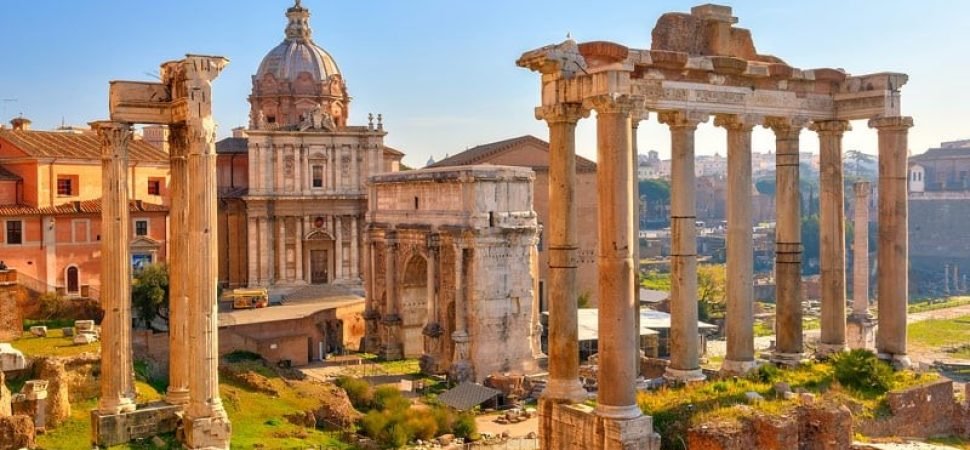
- Rome – The Colosseum, Roman Forum, Palatine Hill.
- Pompeii and Herculaneum – Preserved towns buried in ash.
- Paestum – Greek temples in southern Italy.
- Ostia Antica – Ancient port city of Rome.
Coach hire allows seamless movement between city centres and these archaeological parks.
Greece: Cradle of Democracy and Drama
- Athens – The Acropolis, Agora, and Kerameikos.
- Delphi – The Oracle’s sanctuary and theatre.
- Corinth and Mycenae – Important Bronze Age and Classical sites.
- Epidaurus – World-famous theatre and healing centre.
Coaches are especially useful on winding mountainous roads where public transit is limited.
Turkey: Crossroads of Empire
- Ephesus – One of the best-preserved ancient cities.
- Troy – Legendary site of Homeric epic.
- Pergamon and Hierapolis – Roman and Hellenistic grandeur.
Private coaches help groups explore the vast spread of Anatolian ruins efficiently.
Spain and Portugal: Roman Iberia
- Mérida – Roman theatre, amphitheatre, and aqueducts.
- Tarragona – UNESCO-listed Roman ruins near Barcelona.
- Conímbriga (Portugal) – Mosaic-covered Roman houses.
These smaller cities require organized transport for students flying into Madrid or Lisbon.
United Kingdom and France: Ancient Fortifications and Celtic Roots
- Hadrian’s Wall – Roman frontier stretching across Northern England.
- Bath – Roman spa complex.
- Nîmes and Arles (France) – Roman amphitheatres, temples, and aqueducts.
- Carnac (Brittany) – Megalithic stone alignments.
Coach hire ensures coordinated site access and time for student-led presentations on site.
Chapter 4: Coach Hire Options for History Tours
Standard 50–55 Seater Coaches
- Ideal for large classes or university modules.
- Equipped with overhead storage, reclining seats, air conditioning.
Mini-Coaches (18–35 Seats)
- Suitable for smaller groups or single-department tours.
- Easier navigation in older towns or narrow archaeological roads.
Accessible Coaches
- Wheelchair lifts, secure seating, and step-free entry.
- Important for inclusive academic travel and mixed-ability groups.
Luxury Coaches with Educational Features
- Onboard AV systems for lectures or documentaries en route.
- USB ports, Wi-Fi, and climate-controlled comfort for long trips.
- Storage for excavation kits, tripods, or costume replicas.
Chapter 5: A Sample 7-Day Itinerary: Ancient Italy
Day 1: Arrival in Rome
- Coach pickup from airport.
- Guided tour of the Roman Forum and Colosseum.
Day 2: Vatican Museums (optional) + Ostia Antica
- Coach ride to Ostia Antica.
- Students compare city planning with Rome.
Day 3: Naples and Pompeii
- Early coach to Naples.
- Afternoon visit to Pompeii with an archaeologist.
Day 4: Herculaneum and Paestum
- Coach to Herculaneum (smaller and better preserved).
- Continue to Greek ruins of Paestum.
Day 5: Free Study Day + Museum Visits
- Coach to Naples National Archaeological Museum.
- Students examine artifacts before site discussions.
Day 6: Tivoli Day Trip
- Coach to Hadrian’s Villa and Villa d’Este.
- Evening student group presentations on site.
Day 7: Departure
- Transfer to airport or optional extended trip to Florence or northern ruins.
Chapter 6: Educator and Student Benefits
Educational Focus
- Students use coach travel time for note-taking or review.
- Teachers lead short lectures or distribute handouts during drives.
Cultural Enrichment
- Coaches can make unscheduled scenic stops, local village visits, or detours for food tastings or markets.
Health and Safety
- Fewer changes of transport = lower risk of getting lost or incidents.
- Emergency protocols managed by trained drivers and coordinators.
Chapter 7: Choosing the Right Coach Hire Company
Experience with Educational Travel
- Proven history working with schools, colleges, and universities.
- Familiarity with historical and archaeological site logistics.
Driver Professionalism
- Multilingual, knowledgeable, and respectful of learning environments.
- Trained in youth safeguarding and health & safety.
Route Planning Assistance
- Collaborative itinerary support with estimated travel times and entry schedules.
- Flexibility for alternate pickups, rest stops, or academic briefings.
Price Transparency
- Clear contracts with inclusive mileage, fuel, driver time, and local fees.
- No surprise costs for overtime or road tolls.
Chapter 8: Real-World Testimonials
“Our students were able to see Pompeii, Herculaneum, and Paestum in one trip—something we could never have done using public transport.”
– Dr. Eleanor B., Lecturer in Classical History, UK
“Our coach driver was not just a navigator but a part of the team. He even helped the students rehearse Latin phrases before entering the Forum.”
– Mr. Paolo R., History Teacher, Milan International School
“The freedom to pause on the coast of Epidaurus for a group discussion overlooking the sea was priceless. Coach hire made this learning moment possible.”
– Professor Irene M., Classical Studies Chair, Netherlands
Chapter 9: Best Practices for Planning Coach-Based History Tours
Plan Early
- Book at least 4–6 months in advance for high-demand sites.
Coordinate Site Access
- Some ruins require permits or timed entry; plan coach arrival accordingly.
Group Briefing
- Students should be briefed on coach etiquette, seatbelt use, and safety.
Balance Travel and Learning
- Avoid over-packed days; allow time for site immersion and debriefs onboard.
Conclusion: Making History Come Alive on the Road
Ancient ruins have stories to tell—of gods and gladiators, traders and emperors, philosophers and revolutionaries. For history students, walking among these stones transforms theory into tangible memory. But such transformative journeys rely on reliable ground transport to make the connection between the classroom and the crumbling columns. With professional coach hire, history educators unlock the freedom to design meaningful, flexible, and cost-effective tours that traverse time and terrain. As these young scholars trace ancient footsteps, the wheels of learning turn smoothly behind the scenes—on board a coach designed for discovery.