
Roman Heritage Site Coach Hire
The Roman Empire stretched from the windswept shores of Britannia to the sun-baked coasts of Hispania, weaving together an extraordinary network of cities, fortifications, aqueducts, and amphitheatres. For students, scholars, cultural travellers, and archaeological enthusiasts, visiting these ruins across Italy, France, and Spain offers a chance to walk the roads once trodden by emperors, legionaries, and citizens of one of history’s greatest civilizations. But these ruins are scattered across urban centres, hillsides, countryside, and coasts. Some are UNESCO World Heritage sites; others are remote but no less remarkable. This is where coach hire for Roman Empire sites across Italy, France & Spain becomes not just convenient—but essential. In this article, we’ll explore how coach travel transforms Roman history into a living experience, with in-depth examples, itineraries, benefits, and planning tips to make your classical journey efficient, educational, and unforgettable.
Chapter 1: Why Travel the Roman World by Coach?
Mobility Across Time and Space
The Roman Empire’s legacy is not confined to a single region. Roman Heritage Site Coach Hire To see its scale and diversity, one must travel:
- From Rome’s Colosseum to Nîmes’ amphitheatre,
- From Tarragona’s aqueduct to Pompeii’s preserved streets.
Coach hire allows for multi-country, multi-city journeys without the limitations of train networks or the fragmentation of group air travel.
Tailored, Flexible Itineraries
With a coach, groups can:
- Build custom routes based on curriculum or research focus.
- Adjust timing at each site for guided tours, lectures, and student presentations.
- Include lesser-known but historically rich ruins.
Group Cohesion and Educational Impact
Whether it’s a university department, school class, or archaeological society:
- A coach keeps the group together and focused.
- Teachers and guides can give contextual talks en route.
- Equipment, handouts, and artifacts can travel onboard.
Chapter 2: Roman Sites in Italy – The Heart of the Empire
Rome – The Eternal City
No Roman tour is complete without:
- The Colosseum – Gladiatorial arena and imperial propaganda tool.
- The Roman Forum – The political and religious centre.
- Palatine Hill – Mythical birthplace of Rome.
- Pantheon and Baths of Caracalla – Architectural innovations.
Coach Tip: Rome’s narrow streets require parking outside key zones. A coach with central drop-off and pickup coordination ensures smooth access.
Pompeii & Herculaneum (Naples Region)
Frozen in time by Vesuvius’ eruption, these towns reveal:
- Roman domestic architecture.
- Everyday life—taverns, bathhouses, forums.
Coach Tip: Private coach access is ideal for day trips from Naples, with storage for educational materials and local guide coordination.
Ostia Antica
Rome’s ancient port city:
- Preserved roads, warehouses, apartment blocks.
- Offers an alternative to crowded Pompeii.
Coach Tip: Excellent half-day excursion for student groups studying urban planning or trade
Verona & Aquileia
Northern Italy’s Roman roots include:
- Verona Arena – A well-preserved Roman amphitheatre still in use.
- Aquileia – Important trading city with ruins, mosaics, and a major museum.
Coach Tip: Ideal for longer educational tours heading toward France via Milan or the Alps.
Chapter 3: Roman Sites in France – Gaul’s Monumental Legacy
Nîmes
Known as the “French Rome”:
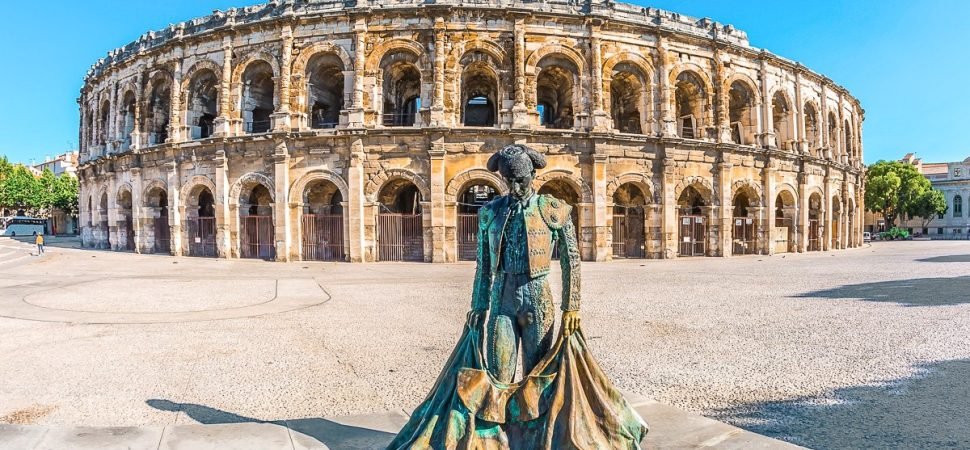
- Arena of Nîmes – Roman amphitheatre still used today.
- Maison Carrée – Exceptionally preserved Roman temple.
- Tour Magne and Aqueducts – Fortifications and water engineering.
Coach Tip: Nîmes is coach-accessible, with excellent student-friendly accommodations nearby.
Pont du Gard
A marvel of Roman engineering:
- Triple-tiered aqueduct bridge over the Gardon River.
- UNESCO-listed and surrounded by nature trails.
Coach Tip: Day trip from Nîmes or Avignon. Coaches can park near the visitor centre.
Arles
- Roman Theatre and Amphitheatre – Still in use for festivals.
- Les Alyscamps – Roman necropolis and early Christian site.
Coach Tip: Combine with Van Gogh-themed cultural tours for interdisciplinary travel.
Lyon (Lugdunum)
- Roman theatres and museums.
- A hub for studying Roman administration in Gaul.
Coach Tip: A good base for further travel into Germany or Italy.
Chapter 4: Roman Sites in Spain – Hispania’s Bold Stones
Tarragona (Tarraco)
Spain’s Roman capital on the Mediterranean:
- Amphitheatre overlooking the sea.
- Forum, aqueduct, circus, and Roman walls.
Coach Tip: An ideal start or end point for coastal tours, with good infrastructure for groups.
Mérida (Augusta Emerita)
UNESCO World Heritage site featuring:
- Roman theatre, amphitheatre, and temple.
- Roman bridge and aqueducts.
Coach Tip: Overnight stay recommended. Many sites are walking distance apart.
Segovia
- Aqueduct of Segovia – One of the best-preserved Roman aqueducts in the world.
- Still delivers water after 2,000 years.
Coach Tip: Easy access from Madrid with stunning hillside views on approach.
Cartagena (Carthago Nova)
- Roman theatre, forum district, and interpretation centres.
Coach Tip: Combine with coastal heritage tours or marine archaeology programs.
Chapter 5: Sample 12-Day Coach Itinerary – Roman Empire Tour
Day 1: Arrive in Rome – Colosseum & Forum
Day 2: Vatican Museums & Palatine Hill
Day 3: Coach to Pompeii & Naples Museum
Day 4: Ostia Antica, then head north to Florence
Day 5: Verona amphitheatre and overnight
Day 6: Coach through the Alps into Nîmes
Day 7: Pont du Gard + Maison Carrée
Day 8: Arles & Roman necropolis
Day 9: Coach to Tarragona via Barcelona
Day 10: Tarragona archaeological park + aqueducts
Day 11: Mérida exploration
Day 12: Depart via Madrid or extend to Segovia
Chapter 6: Ideal Groups for Roman Empire Coach Tours
- Universities – Classics, archaeology, history, architecture.
- Secondary Schools – Latin language and Roman studies.
- Cultural Travel Clubs – Ancient history and heritage.
- Family Heritage Tours – With historical reenactment interests.
- Museum-led Expeditions – With artifact study programs.
Chapter 7: Features of a Coach for Historical Tours
- Comfortable Seating & Climate Control – Essential for long travel days.
- Onboard Wi-Fi & USB Charging – For research and communication.
- AV Equipment – For lectures, films (Gladiator, I, Claudius).
- Luggage Storage – For tools, costumes, teaching aids.
- Multilingual Drivers & Guides – For cross-country coordination.
Chapter 8: Practical Tips for Booking a Roman Empire Coach Tour
Choose a Pan-European Coach Provider
Ensure your provider has licenses to operate in Italy, France, and Spain.
Work With Guides or Historians
Many coach companies partner with cultural guides who specialise in Roman heritage.
Include Rest and Reflection
Build in free evenings or slower days for journaling, sketching ruins, or student presentations.
Consider Seasonality
Late spring or early autumn offers good weather and fewer crowds.
Use Apps and Audio Guides
Pair coach travel with digital resources tailored to Roman archaeology.
Chapter 9: Testimonials from Real-World Educational Groups
“Seeing the Roman roads from the windows as we approached Mérida was like stepping into history. The coach made it effortless.”
– Prof. Elena Morales, University of Madrid
“Our students wrote better essays after walking the streets of Pompeii and Tarraco. Travel enhanced their understanding tenfold.”
– Dr. Andrea P., Classical History Teacher, UK
“With a coach, we reached remote ruins our textbooks never mentioned. It felt like discovering Rome all over again.”
– Cultural Heritage Society Tour Coordinator
Conclusion: Travel the Roman Empire—One Road at a Time
The Roman Empire was built on roads—and those same routes, or their modern successors, can take you deep into the world of emperors, engineers, and orators. With a dedicated coach, exploring these ruins becomes a seamless blend of education, comfort, and discovery. From the grandeur of Rome’s Colosseum to the sunlit aqueducts of Spain and the dignified temples of Gaul, this journey isn’t just about stone. It’s about understanding how civilization was connected—by roads, by power, and by vision. Let a professional coach hire company guide your group through that same vision—making ancient travel practical in the modern age.