
“Bridge Architecture Coach Tour Europe”
Europe’s bridges are more than passageways—they are architectural wonders, cultural icons, and silent witnesses to centuries of change. From the medieval grace of Prague’s Charles Bridge to the iconic grandeur of London’s Tower Bridge, these structures connect not just lands but also people, epochs, and empires. A Coach Tour of European Bridges offers travellers the rare opportunity to experience the continent’s finest crossings—stone, steel, and suspension—in one coherent, panoramic journey. Designed for history lovers, architecture enthusiasts, and curious explorers, this overland adventure seamlessly combines scenic routes, city explorations, and engineering marvels. In this article, we fully explore how such a tour can be planned, what bridges should be included, historical contexts, sample itineraries, and why coach travel is the ideal way to experience these icons of European heritage.
Why Choose a Coach Tour to Explore European Bridges?
- Comfortable and Continuous Discovery
Coach travel enables you to experience Europe in continuity. Instead of flying between cities and missing the countryside, a coach lets you trace historical routes, “Bridge Architecture Coach Tour Europe” rivers, and valleys that shaped bridge building over centuries.
- Flexible Itinerary for Engineering Enthusiasts
Stop for photography, study historic details, or enjoy guided talks on-site. Coaches allow:
- Custom stopovers at lesser-known but significant bridges.
- Group learning, including onboard presentations and documentaries.
- Easy access to remote or elevated bridges unreachable by train.
- Cost-Effective & Sustainable
When spread across 20–40 people, coach tours become highly economical and are among the most environmentally friendly travel modes. Plus, group travel aligns with Europe’s growing push for green tourism.
Iconic Bridges to Include on the Coach Tour
This section features a curated collection of Europe’s most iconic and significant bridges, arranged geographically and historically for a smooth travel flow.
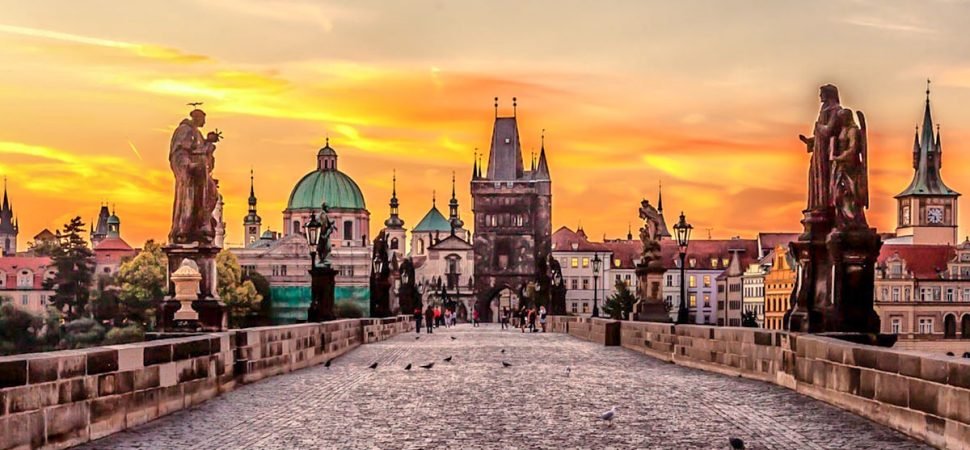
Charles Bridge (Karlův most) – Prague, Czech Republic
Built: 1357
Type: Stone arch bridge
River: Vltava
Overview:
With its 30 baroque statues and panoramic views, Charles Bridge is Prague’s most cherished landmark. Built under Emperor Charles IV, the bridge links Prague Castle with the Old Town and showcases Gothic and baroque design excellence.
Coach Tip:
Drop-off at Malá Strana or Kampa Island. Explore early morning for a serene, uncrowded experience.
Iron Bridge – Shropshire, England
Built: 1779
Type: Cast iron arch
River: Severn
Overview:
The world’s first iron bridge, this UNESCO World Heritage site symbolizes the Industrial Revolution. It remains a pilgrimage site for engineers and historians.
Coach Access:
Parking available at Ironbridge Gorge Museum. Combine with visits to the Victorian village and blast furnaces nearby.
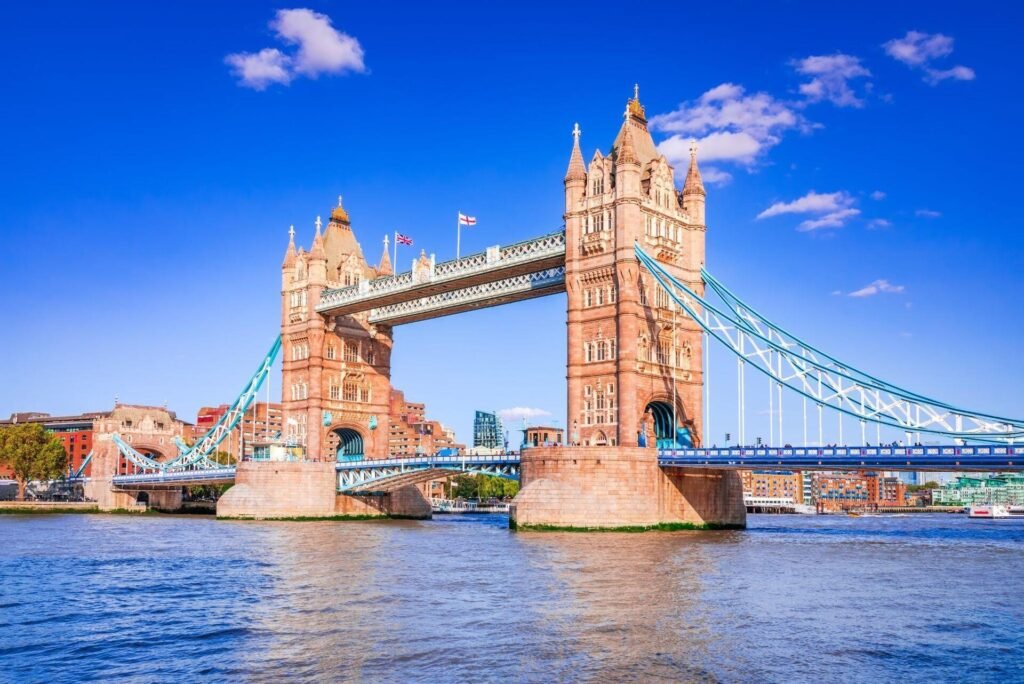
Tower Bridge – London, England
Built: 1894
Type: Bascule and suspension
River: Thames
Overview:
Arguably the most photographed bridge in the world, Tower Bridge offers exhibitions, glass walkways, and one-of-a-kind views of the London skyline.
Coach Tips:
Use Tower of London drop-off zone. Book group access to the Tower Bridge Engine Rooms for historical context.
Ponte Vecchio – Florence, Italy
Built: 1345
Type: Medieval stone closed-spandrel arch
River: Arno
Overview:
Europe’s oldest surviving segmental arch bridge and a Renaissance relic, the Ponte Vecchio is home to jewellery shops and historic residences. It survived WWII intact—on Hitler’s own orders.
Coach Tip:
Park outside ZTL zones. Combine with walking tours of Florence’s historic centre.
Széchenyi Chain Bridge – Budapest, Hungary
Built: 1849
Type: Suspension bridge
River: Danube
Overview:
Budapest’s first permanent bridge between Buda and Pest, this grand structure epitomizes 19th-century Austro-Hungarian engineering. Illuminated at night, it’s a spectacle not to be missed.
Coach Access:
Drop near Buda Castle funicular or Pest embankment. Evening cruises under the bridge add magic to the itinerary.
Millau Viaduct – Southern France
Built: 2004
Type: Cable-stayed
River: Tarn
Overview:
The tallest bridge in the world, soaring 343 meters, the Millau Viaduct is a modern engineering marvel. Designed by Norman Foster, it’s a must for any architectural itinerary.
Coach Tip:
Park at official viewpoint. Visit the Viaduct Experience Centre to understand its construction.
Pont du Gard – Near Nîmes, France
Built: Roman era (~1st century AD)
Type: Ancient Roman aqueduct bridge
River: Gardon
Overview:
A UNESCO World Heritage Site, Pont du Gard is a testament to Roman ingenuity and scale. Still structurally intact, it once transported water over 50 km to Nîmes.
Coach Tip:
Combine with lavender fields or Roman ruins. Great picnic site with river swimming.
Erasmus Bridge – Rotterdam, Netherlands
Built: 1996
Type: Cable-stayed
River: Nieuwe Maas
Overview:
Nicknamed “The Swan,” this ultra-modern asymmetrical bridge embodies Dutch innovation and aesthetics. Especially striking at night with LED lights.
Coach Note:
Best viewed from river cruise. Good stop on a modern architecture tour including The Cube Houses and Markthal.
Stari Most (Old Bridge) – Mostar, Bosnia & Herzegovina
Built: 1566 (rebuilt 2004)
Type: Ottoman stone arch
River: Neretva
Overview:
Destroyed in the 1990s war and faithfully reconstructed, Stari Most is a symbol of resilience and reconciliation. Home to world-famous bridge divers.
Coach Access:
Park above the city and walk in. Combine with guided tour on post-war restoration and local culture.
Vasco da Gama Bridge – Lisbon, Portugal
Built: 1998
Type: Cable-stayed
River: Tagus
Overview:
At over 12 km long, it’s one of Europe’s longest bridges. It commemorates 500 years since Vasco da Gama’s discovery of the sea route to India.
Coach Tip:
Panoramic stops available at Parque das Nações. Combine with Lisbon’s Expo architecture.
Sample 10-Day Coach Tour Itinerary – From Prague to London
Day 1–2: Prague, Czech Republic
- Visit Charles Bridge at sunrise.
- Boat ride under the bridge with Czech guide.
- Onward to Vienna via Brno.
Day 3: Vienna → Budapest
- Stop at historic bridges en route.
- Evening illumination tour of Chain Bridge in Budapest.
Day 4–5: Drive through the Alps → Florence
- Scenic route via Salzburg.
- Ponte Vecchio walking tour and Uffizi stopover.
Day 6: Southern France
- Stop at Pont du Gard and Millau Viaduct.
- Overnight in Montpellier or Avignon.
Day 7–8: Drive to Rotterdam via Lyon and Paris
- Visit Erasmus Bridge and architectural boat tour.
Day 9: Channel Tunnel Crossing
- Via Calais to Dover by coach + ferry or Eurotunnel.
- Explore Tower Bridge and optional Thames boat ride.
Day 10: Iron Bridge, Shropshire
- Final visit to the cradle of the Industrial Revolution.
- Wrap-up dinner and group reflection session.
Ideal Groups for a European Bridge Coach Tour
- Architecture & Engineering Students
- Learn civil and structural engineering history firsthand.
- Custom talks with local architects or restoration experts.
- Heritage & History Enthusiasts
- Trace historical evolution from Roman arches to modern spans.
- Include UNESCO site visits and museums.
- Photography & Art Groups
- Bridges offer perfect geometry and light play.
- Special sunrise/sunset coach schedules.
- Senior Travel Clubs
- Easy access, gentle walking, and scenic landscapes.
- Multi-lingual guides and culturally rich experiences.
- School & College Educational Tours
- STEM education meets European culture.
- Integrate lessons on transportation, design, and society.
Practical Considerations for Coach Travel
- Choosing the Right Coach
- Luxury options: Panoramic windows, reclining seats, air conditioning.
- Luggage storage: Important for longer routes.
- Onboard media: Documentaries on bridge building.
- Border Crossings
- Ensure all visas are valid for Schengen and UK re-entry.
- Work with operators experienced in cross-European routes.
- Booking and Timing
- Spring to early autumn offers the best weather for bridge photography.
- Avoid peak city traffic with early morning or off-day schedules.
Combining Bridge Tours with Other Themes
- River & Canal Heritage
- Combine with boat tours or locks (Amsterdam, Bruges, Venice).
- Learn about water transport and medieval trade routes.
- Food & Wine Regions
- Lunch stops in Tuscany, Burgundy, or Moselle.
- Picnics near riverbanks under iconic bridges.
- UNESCO and World Heritage Tours
- Several bridges featured are UNESCO-listed (Charles, Iron, Pont du Gard).
- Full itinerary can follow World Heritage corridors.
Conclusion: Building Bridges, Literally and Culturally
A Coach Tour of European Bridges is more than an architectural showcase—it’s a journey across centuries, styles, and civilizations. Each bridge tells a story, and together they narrate the history of Europe itself—from Roman empire to renaissance art, industrial revolution to contemporary design. Traveling by coach allows you to see more, bond more, and understand more—not just how we connect land to land, but how human ingenuity bridges gaps in culture, language, and time. Whether you’re a civil engineer or a curious traveller, this is a journey that elevates your perspective—one bridge at a time.