
Berlin Wall and Iron Curtain Coach Tours
The Cold War wasn’t fought on battlefields—it unfolded across cities, walls, propaganda stations, and everyday lives in divided Europe. Few places offer a richer historical experience than the urban centers of Berlin, Prague, and Budapest—three capitals that bore witness to totalitarian rule, revolutions, resistance, and the eventual fall of communism. For educational groups, political historians, student delegations, and Cold War scholars, tracing this history through physical space is a powerful way to understand one of the 20th century’s most defining global conflicts. A Cold War Historical Route through Berlin, Prague, and Budapest is best navigated by private coach hire—ensuring continuity, logistical ease, and a fully immersive experience. This article explores in detail how coach travel enhances learning, accessibility, and itinerary flexibility while diving deep into Cold War landmarks, sample routes, and must-visit sites.
Chapter 1: Why Choose Coach Hire for Cold War Travel
Multi-City, Multi-Country Itineraries Made Easy
These three capitals lie in different countries—Germany, Berlin Wall and Iron Curtain Coach Tours Czech Republic, and Hungary—with border crossings, varying infrastructure, and regional historical sites in between. Coach hire simplifies this by:
- Offering door-to-door group transport.
- Bypassing airport or train coordination.
- Creating a continuous narrative journey through history.
Tailored Educational Experience
Unlike standard tours, coach hire lets you:
- Pause at rural Cold War relics (e.g. watchtowers, bunkers, Soviet monuments).
- Conduct lectures or group reflections on board.
- Carry AV equipment, books, and teaching materials.
Safety, Comfort & Convenience
Modern coaches feature:
- Climate control, reclining seats, and Wi-Fi.
- Experienced multilingual drivers.
- Room for luggage, learning materials, and equipment.
- Flexible departure/arrival times for museums and institutions.
Chapter 2: Berlin – The Divided Capital of the Cold War
Berlin Wall & Checkpoint Charlie
- East Side Gallery: Largest surviving wall segment, now painted with peace murals.
- Checkpoint Charlie: The most famous crossing point between East and West.
- Berlin Wall Memorial: Preserved death strip and watchtowers.
Museums of Memory
- Stasi Museum: In the former secret police HQ.
- DDR Museum: Interactive exhibits of everyday life in East Germany.
- Topography of Terror: Documenting Nazi and Stasi repression.
Cold War Hotspots
- Allied Museum: U.S., British, and French presence in West Berlin.
- Glienicke Bridge: The “Bridge of Spies,” used for espionage exchanges.
- Teufelsberg: Former NSA listening station on WWII rubble.
Coach Tip:
- Coaches provide quick access to eastern and western landmarks spread across Berlin.
- Private group tours at institutions can be coordinated with precise arrival windows.
Chapter 3: Prague – The Rebellion Behind the Curtain
The Prague Spring (1968)
- Wenceslas Square: Site of student protests and Jan Palach’s self-immolation.
- National Museum façade: Still bears Soviet bullet scars.
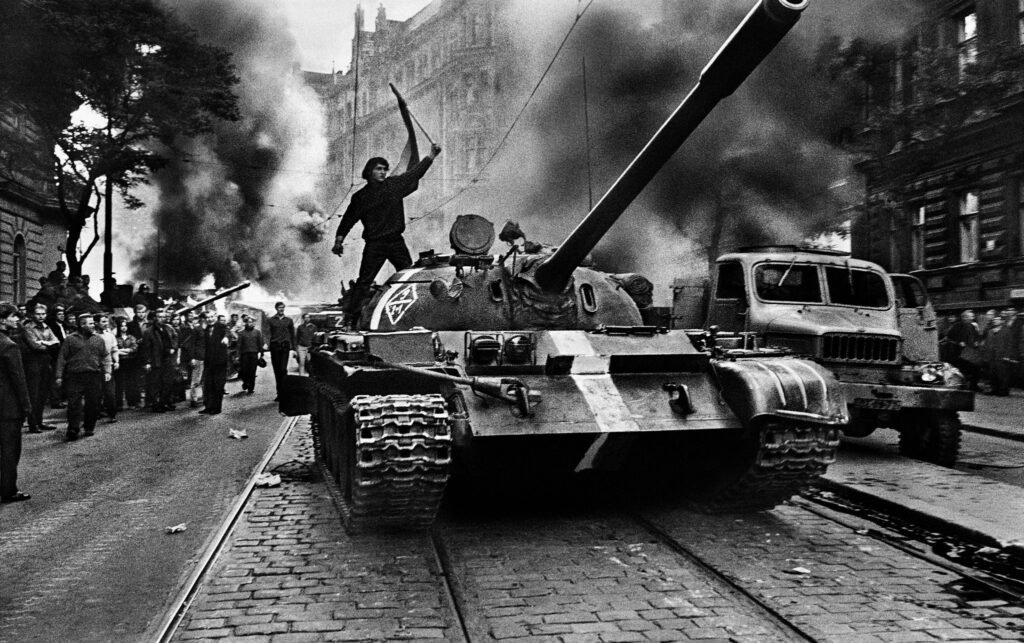
- Radio Building: Where citizens resisted invading Warsaw Pact tanks.
Velvet Revolution (1989)
- Narodni Street Memorial: Site of a brutal police crackdown.
- Lennon Wall: Covered with graffiti symbols of resistance.
- Vaclav Havel Legacy Tours: Explore the playwright-turned-president’s role.
Communism Museum
- Fascinating insights into the surveillance state, propaganda, and scarcity economy.
Coach Tip:
- Narrow Prague streets are managed with designated coach drop zones.
- Coaches make day trips possible to Theresienstadt (Terezín) and other Cold War-relevant sites.
Chapter 4: Budapest – Revolution and Surveillance in the East Bloc
The 1956 Hungarian Uprising
- Parliament Square: Memorial to students and citizens killed during protests.
- Corvin Passage: Epicenter of armed street fighting against Soviet tanks.
- 1956 Museum: Dedicated to the short-lived revolution.
State Terror and Everyday Life
- House of Terror Museum: Former headquarters of the fascist Arrow Cross and later the Communist secret police.
- Memento Park: Outdoor museum of decommissioned Soviet statues and slogans.
Jewish Quarter & Cold War Memory
- Once surveilled intensely; now home to guided tours about life under the Iron Curtain.
Coach Tip:
- Use coach travel to reach Szentendre or Gödöllő Palace for additional Cold War backdrops.
- Avoid navigating Budapest’s metro with large groups by using direct coach drop-offs.
Chapter 5: Sample 10-Day Cold War Historical Coach Tour
Day 1–2: Arrive in Berlin
- Berlin Wall Memorial, DDR Museum, Checkpoint Charlie, East Side Gallery.
Day 3: Berlin Suburbs & Sites
- Teufelsberg NSA Station, Glienicke Bridge, Stasi Prison in Hohenschönhausen.
Day 4: Coach to Prague
- Optional stop in Dresden or Terezín Memorial.
Day 5–6: Explore Prague
- Wenceslas Square, Lennon Wall, Velvet Revolution Walking Tour, Museum of Communism.
Day 7: Coach to Budapest
- Scenic route with border commentary.
Day 8–9: Budapest’s Cold War Sites
- House of Terror, Parliament Square, Memento Park, Jewish Quarter.
Day 10: Reflection Day & Departure
- Group discussion, historical debrief, and guided wrap-up.
Chapter 6: Benefits of Coach Hire Over Other Transport
| Feature | Coach Hire | Flights | Trains |
| Border crossing ease | ✔ | ✘ | ✔ (limited) |
| Group cohesion | ✔ | ✘ | ✘ |
| Custom stops (museums, monuments) | ✔ | ✘ | ✘ |
| Academic guidance en route | ✔ | ✘ | ✘ |
| Affordable for groups | ✔ | ✘ | ✔ |
Chapter 7: Ideal Groups for Cold War Historical Coach Tours
- University History or Political Science Departments
- Secondary Schools Studying 20th Century Europe
- Think Tanks and Policy Institutes
- Veterans’ Associations and Memorial Groups
- Museums and Documentary Film Teams
- Educators’ Continuing Professional Development Programs
Chapter 8: Onboard Experience for Cold War Tours
AV Systems
Play Cold War-era footage or documentaries like The Lives of Others or Bridge of Spies.
Multilingual Guides
History-trained guides for German, Czech, and Hungarian narratives.
Wi-Fi & Charging
Essential for student research and uploads during the journey.
Equipment Storage
For books, film gear, or interactive learning kits.
Chapter 9: Optional Extensions Beyond the Capital Cities
Germany
- Leipzig: Peaceful Monday Demonstrations in 1989.
- Potsdam: Site of Allied negotiations post-WWII.
Czech Republic
- Terezín: Nazi ghetto turned Cold War propaganda site.
- Brno: Communism resistance and student movements.
Hungary
- Debrecen: Early student protest sites.
- Border to Austria: Iron Curtain breach at Sopron.
Chapter 10: Planning & Booking Tips
Start 6+ Months Ahead
- Museum slots and Cold War guides fill fast for academic groups.
Partner With Experienced Coach Providers
- Choose companies licensed for cross-border routes in the Schengen zone.
Prepare Documentation
- While Schengen travel is seamless, always carry ID and group visas if needed.
Build in Reflection Time
- Cold War history is intense—schedule student-led discussions or journaling sessions.
Customize Themes
- Focus on propaganda, resistance, youth movements, or technology and espionage.
Chapter 11: Testimonials from Educators and Historians
“Having a coach meant we didn’t just talk about the Berlin Wall—we followed it, stopped, and walked across former death strips. Unforgettable.”
– Prof. Miriam F., Modern History Lecturer, UK
“Our Cold War documentary team relied on coach travel to capture everything from Stasi archives in Berlin to Soviet monuments outside Budapest.”
– Jan Novak, Independent Filmmaker
“We held debates on board about the morality of the Soviet invasions. The coach became our moving classroom.”
– Rachel K., Sixth Form Teacher, Ireland
Conclusion: Understanding the Cold War by Road
The Cold War shaped borders, ideologies, and lives—especially in Berlin, Prague, and Budapest. These cities are more than destinations; they are living museums of struggle, surveillance, and revolution. Coach hire makes this immersive journey possible. It binds the story together in a continuous path—from walls and tanks to protests and peace. Whether you’re leading a classroom, filming a documentary, or simply retracing history’s fault lines, this route demands more than photos. It demands context, reflection, and the kind of freedom that only tailored, on-the-ground transport can provide.