

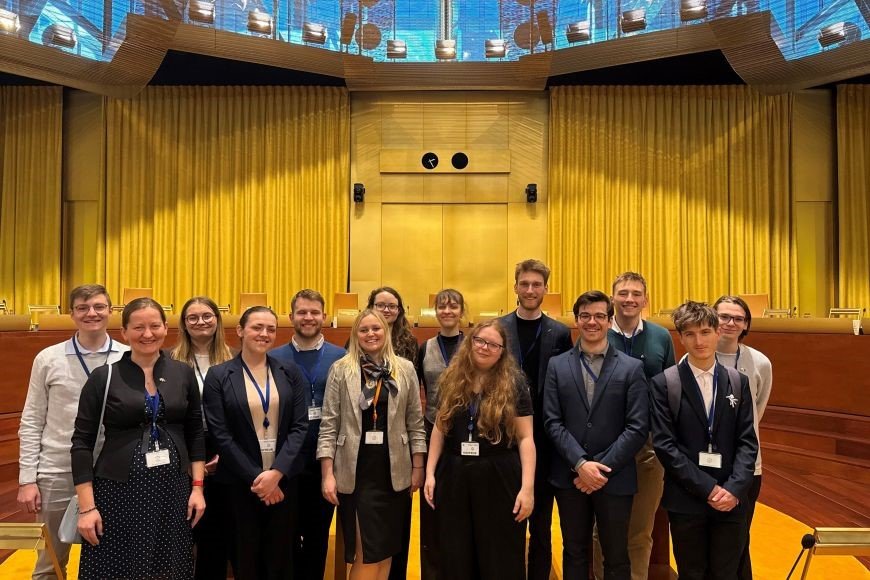
Legal academic tours to the European Court
Legal education isn’t just about lectures and textbooks—it’s also about seeing law in action. For law students, few opportunities rival the chance to visit the European Court of Justice (ECJ) in Luxembourg. This institution is the judicial heart of the European Union, and it offers invaluable insights into supranational legal processes, EU jurisprudence, and comparative law. But organizing such a journey—especially for a full class or faculty group—requires careful planning and dependable transport. That’s where coach hire for law students visiting the European Court of Justice becomes essential. This comprehensive guide explores the logistics, advantages, planning strategies, and student benefits of hiring a coach for ECJ visits, turning a complex international field trip into a smooth, enriching, and inspiring educational experience.
Why the European Court of Justice Is a Must-Visit for Law Students
The ECJ, located in Luxembourg City, serves as the supreme court for EU law, ensuring its uniform interpretation and application across all member states. Legal academic tours to the European Court Law students visiting the ECJ gain:
- Direct exposure to high-level judicial proceedings
- Insights into preliminary rulings, enforcement actions, and annulments
- Understanding of the relationship between national courts and EU law
- Engagement with real-time jurisprudence on topics such as human rights, trade, data protection, and competition law
Such visits offer a pan-European legal perspective, ideal for students studying international law, European Union law, or comparative constitutional systems.
The Value of Coach Hire for Academic Legal Tours
Planning academic travel across borders is a logistical puzzle. Flights and trains are often disjointed and less adaptable for student groups. Coach hire, by contrast, offers:
Flexibility and Customization
- Tailored pick-up and drop-off schedules from universities or law faculties
- Capacity for single-day or multi-day round trips
- Routing through other legal or governmental institutions in Brussels, Strasbourg, or The Hague
Cost-Effectiveness
- Shared expenses across a group of 30–50 students make coach travel more economical than rail or air
- Bundled pricing includes tolls, driver accommodation, fuel, and border compliance
Safety and Supervision
- Traveling together ensures better coordination, student safety, and reduced risk of missing connections
- Secure underfloor luggage storage and onboard Wi-Fi keep students focused and connected
Carbon Efficiency
- Coaches produce lower CO₂ emissions per passenger than individual car trips or short-haul flights, aligning with universities’ sustainability goals
Popular Departure Cities for ECJ Coach Tours
Coach tours to the European Court of Justice often originate from law schools across Europe. Some common routes include:
- Brussels to Luxembourg (220 km): Ideal for combining ECJ visits with EU Parliament and Commission tours
- Strasbourg to Luxembourg (220 km): Two EU institutions in one tour: ECJ and European Court of Human Rights
- Paris to Luxembourg (370 km): Departing from France’s top law faculties like Sciences Po, Paris I or II
- Frankfurt to Luxembourg (240 km): Easy transfer for German students studying EU law
- Amsterdam or Utrecht to Luxembourg (370–410 km): A scenic route for Dutch law students
- Vienna or Prague to Luxembourg (700–850 km): Multi-day tours often including stops at EU agencies en route
These cities are well-connected, allowing for efficient overnight or early-morning departures and group hotel packages in Luxembourg.
What to Expect at the European Court of Justice
Law students visiting the ECJ can expect an immersive experience that includes:
Guided Tours
- Multilingual guided sessions through the Grande Salle d’Audience (Grand Chamber)
- Overview of the court’s history, structure, and case processes
- Architecture tours of the iconic golden towers and court buildings
Court Hearings
- Students can attend public hearings and witness live oral arguments
- Opportunity to observe judges and advocates-general at work
- Debates often involve cross-border legal questions, reflecting real-world EU litigation
Meetings and Workshops
- Pre-booked sessions with legal officers or visiting experts
- Roundtables on EU law topics, recent judgments, and academic interpretation
- Participation in mock court exercises or case analyses if arranged through university contacts
Library and Resource Access
- Visits to the ECJ Library, one of the largest EU law collections
- Access to case databases, legal commentaries, and historical judgments