
history field trips France and Belgium
World War I left a deep imprint on the landscapes of northern France and Belgium. A century later, its legacy endures in quiet cemeteries, preserved trenches, haunting memorials, and educational centers. For educators, history enthusiasts, and student groups, educational coach trips to the WWI battlefields of France and Belgium offer a profoundly moving and academically enriching experience. This guide provides an in-depth exploration of how to plan, conduct, and enrich such tours, with practical advice and suggested itineraries that span some of the most historically significant sites in Western Europe.
Why Choose Coach Travel for WWI Educational Tours?
Coach travel is the ideal mode of transport for educational battlefield tours for several compelling reasons:
- Logistical Efficiency
Traveling by coach allows your group to move smoothly between remote battlefield sites and scattered memorials without relying on public transport. Many WWI sites lie in rural or semi-rural areas, history field trips France and Belgium often without direct train or bus links.
- Group Comfort and Cohesion
Coaches can accommodate school classes or university seminars together in one vehicle, creating a focused and cohesive learning environment. Comfortable seating, on-board amenities, and the ability to store luggage and educational materials all enhance the experience.
- Customizable Itineraries
Private coach hire enables full control over the schedule and destinations. Whether you’re tracing a particular regiment, following in the footsteps of a national battalion, or conducting a comparative study of the war’s impact in France and Belgium, your itinerary can be entirely tailored.
- Onboard Learning Opportunities
Coaches offer time for group reflection, guided commentary, and multimedia presentations en route to each site, transforming travel time into learning time.
Planning an Educational Coach Tour: Key Considerations
Before diving into the rich battlefield landscapes of the Western Front, here are several key steps and tips for planning your coach trip:
- Define Educational Objectives
Identify the themes your trip will focus on:
- Trench warfare
- Medical treatment and casualty care
- The war poets and cultural legacy
- National contributions (e.g., Commonwealth, French, German)
- Commemoration and memory
- Select the Right Regions
France and Belgium together contain hundreds of WWI sites. Narrow your focus based on time and objectives:
- The Somme (France) – Site of the 1916 offensive, one of the war’s bloodiest battles.
- Ypres Salient (Belgium) – Known for trench warfare, gas attacks, and enduring memorials.
- Arras and Vimy Ridge (France) – Canadian and British contributions are especially well commemorated here.
- Verdun (France) – A symbol of French sacrifice and military endurance.
- Work With Experienced Battlefield Guides
Consider hiring professional battlefield guides or booking through specialized educational tour companies. Their expertise will enrich the tour with stories, historical context, and personal narratives.
- Incorporate Time for Reflection
Schedule time at cemeteries or memorials for reflection, discussion, or ceremonies. Many schools choose to have students read letters, poems, or place wreaths.
Sample 5-Day Educational Coach Itinerary: France & Belgium WWI Battlefields
Day 1: Arrival in Northern France
- Depart from the UK or home country by private coach.
- Channel crossing via Eurotunnel or ferry.
- Check-in in Arras or Albert, two towns close to the Somme.
- Evening briefing: overview of WWI, trench warfare, and itinerary review.
Day 2: The Battle of the Somme – France
- Thiepval Memorial to the Missing: Monumental memorial to over 72,000 missing British and South African soldiers.
- Beaumont-Hamel Newfoundland Memorial: Preserved trenches and haunting site of the Canadian disaster on July 1, 1916.
- Lochnagar Crater: Massive mine crater from the first day of the Somme offensive.
- Delville Wood and South African National Memorial: Reflects global participation in the war.
- Evening discussion session.
Day 3: Arras and Vimy Ridge
- Wellington Quarry (Carrière Wellington): British tunnels under Arras, used in 1917 offensive – guided underground tour.
- Vimy Ridge Canadian Memorial: Stunning limestone monument atop the ridge, with visitor center and preserved trenches.
- Notre Dame de Lorette Cemetery: France’s largest military cemetery.
- Transfer to Ypres (Ieper), Belgium in the evening.
- Optional stop at the French and German cemetery of Neuville-Saint-Vaast.
Day 4: Ypres Salient – Belgium
- In Flanders Fields Museum (Ypres): Engaging, interactive museum in the Cloth Hall.
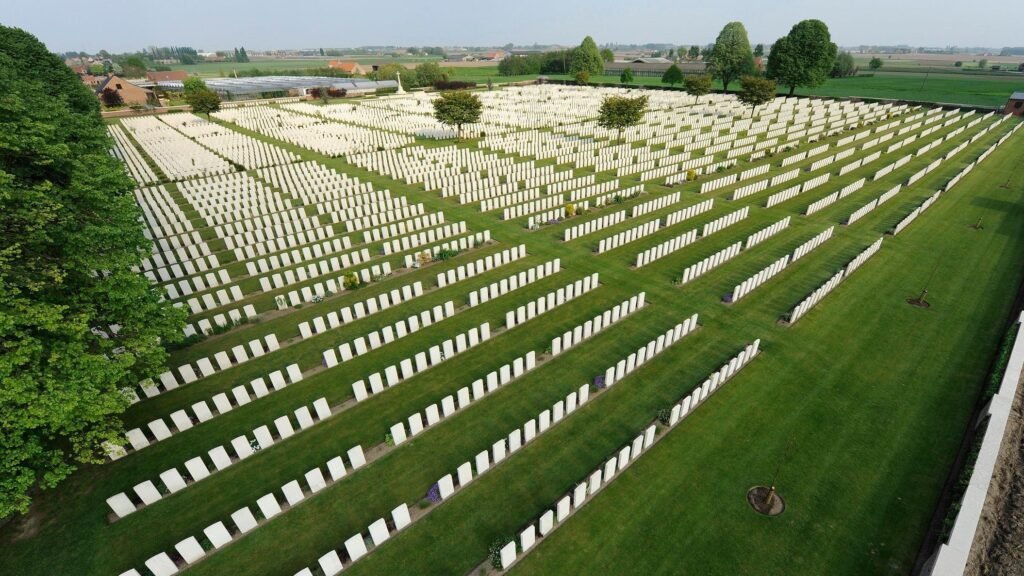
- Tyne Cot Cemetery: Largest Commonwealth war cemetery in the world.
- Langemark German Cemetery: Contrast in style and national commemoration.
- Hill 60 and Sanctuary Wood Trenches: Preserved battlefield sites and remnants of trench warfare.
- Menin Gate Ceremony (8:00 PM): Daily Last Post in Ypres, ideal for student participation.
Day 5: Return Journey
- Optional morning visit to Essex Farm Cemetery: Site associated with John McCrae and “In Flanders Fields.”
- Return to home country via coach, with final group discussion on memory, learning outcomes, and reflection.
Notable WWI Sites to Include (France & Belgium)
Beyond the sample itinerary, here are some important locations worth incorporating based on time, focus, or nationality:
In France:
- Verdun Battlefield and Fort Douaumont – Symbol of French resistance.
- Somme 1916 Museum, Albert – In-depth look at trench life and the Somme battle.
- La Boisselle and Mametz Wood – Key British and Welsh sectors.
- Musée de la Grande Guerre, Meaux – One of Europe’s largest WWI collections.
In Belgium:
- Passchendaele Memorial Museum, Zonnebeke – Insight into the 1917 Third Battle of Ypres.
- Ploegsteert Memorial (Plugstreet) – British and Commonwealth memorial in a quieter sector.
- Christmas Truce Memorial at St. Yvon – Symbolic site for discussion of humanity in war.
- Hooge Crater Museum – Battlefield artifacts and reconstructed trenches.
Cultural and Educational Enrichment Activities
To ensure a deeper impact and engagement from students or travelers, supplement your itinerary with the following:
- Student-led Presentations
Have students prepare and deliver brief presentations on soldiers, regiments, or poems associated with specific sites.
- War Poetry Readings
Encourage readings of WWI poems at cemeteries or memorials:
- “In Flanders Fields” – John McCrae
- “Dulce et Decorum Est” – Wilfred Owen
- “The Soldier” – Rupert Brooke
Roleplaying or Letter Reading
Read aloud actual letters from soldiers, nurses, or family members, offering emotional insight into daily life during war.
- Grave Searches
Have students research local soldiers or family names to find at the Commonwealth War Graves sites. Many organizations support finding specific graves in large cemeteries.
- Documentary Screening Onboard
Use coach travel time to show short documentaries or archival footage related to the sites being visited.
Logistics and Travel Tips
- Best Time to Visit: April to October offers the most reliable weather and daylight.
- Accommodation: Youth hostels, local hotels, or school-friendly bunkhouses in Arras, Albert, and Ypres cater well to groups.
- Food Options: Pre-arranged group meals or packed lunches can keep the schedule running efficiently.
- Passports & Insurance: Ensure all travelers have valid documents and travel insurance.
- Group Safety: Many battlefield areas are safe, but always stick to marked paths—especially near former front lines with residual ordnance.
Commemorative Value and Legacy
Visiting the battlefields is not only a history lesson—it’s a pilgrimage of remembrance. Students often return home with a deepened respect for the past, an understanding of the sacrifices made, and insights into international conflict, peacekeeping, and resilience. Coach travel allows them to trace the war in physical space, standing where soldiers stood, and learning through experience. These trips align with broader educational goals: promoting intercultural understanding, reflecting on peace and conflict, and appreciating the role of global history in shaping today’s Europe.
Trusted Battlefield Tour Providers (Europe-based)
While some schools prefer to self-organize, the following companies are known for professionally arranged educational coach tours:
- Anglia Tours – UK-based specialists in WWI and WWII battlefield education.
- Galina International Study Tours – Curriculum-linked group trips for UK schools.
- In Flanders Fields Educational Team – Belgium-based resources and local guiding.
- Leger Holidays (Battlefield Tours) – Larger operator with customisable group programs.
- Battle Honours Tours – Veteran-led and historically robust group tours.
Conclusion
Educational coach trips to WWI battlefields in France and Belgium offer much more than sightseeing—they are powerful journeys into history, memory, and humanity. Carefully planned tours foster critical thinking, empathy, and a vivid understanding of one of the most defining conflicts of the 20th century. By combining expert guiding, meaningful group activities, and smooth coach logistics, educators can transform a battlefield tour into a deeply formative experience for students and lifelong learners alike. Whether standing among the poppies of the Somme or hearing the bugle call at the Menin Gate, your group will carry these lessons long after the journey ends.